TENGABLE | Ben Maoz
Restoring the sense of touch
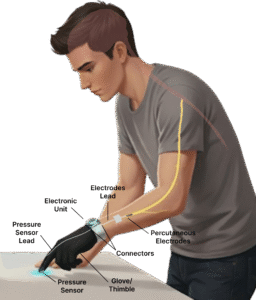
Loss of tactile sensation can result from traumatic peripheral nerve injuries, chronic diseases, or other conditions. It can make everyday activities difficult, reduce independence, and increase the risk of injury. TENGABLE is developing Re-Sense, a personalized, fully implantable system designed to restore natural-like touch for people with peripheral nerve injuries and other conditions that cause loss of sensation.
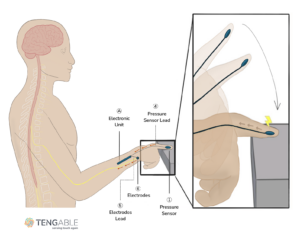
Re-Sense creates an artificial sensory pathway that mimics natural touch:
- Detect
A miniature pressure sensor implanted at the fingertip detects contact and pressure. - Process
The sensor generates an electrical signal, which a microprocessor translates into a specific pattern of neural stimulation. - Stimulate
The stimulation is delivered through electrodes positioned near a healthy peripheral sensory nerve. - Feel
The nervous system interprets these stimulation patterns as tactile information, allowing the brain to perceive touch.
Together, these components create a closed-loop system that provides real-time sensory feedback. Following successful laboratory studies, TENGABLE is currently advancing Re-Sense toward first-in-human clinical trials, with the long-term goal of making touch restoration accessible and sustainable for people who have lost sensation.